
Are you a mom who is frequently overstimulated? Short-tempered? Snapping at your spouse and children? Exhausted? Maybe you need to expand your “Window of Tolerance”
I’ve been talking a lot about the “window of tolerance“ with my mom clients. I see a lot of moms who report feeling “overstimulated” and “overwhelmed.” They try to steal 5 mins in the bathroom for peace and quiet only to be interrupted by little knocks and cries for “momma.” A mom I was working with the other day tried to do her nails in the bathroom for 5 minutes to attempt to self-care only to be interrupted by her child needed to talk to her. It can be a lot on moms and parents in general.
One of the most important goals I often work with moms on is how to extend their “window of tolerance.”
WHAT IS THE “WINDOW OF TOLERANCE?”
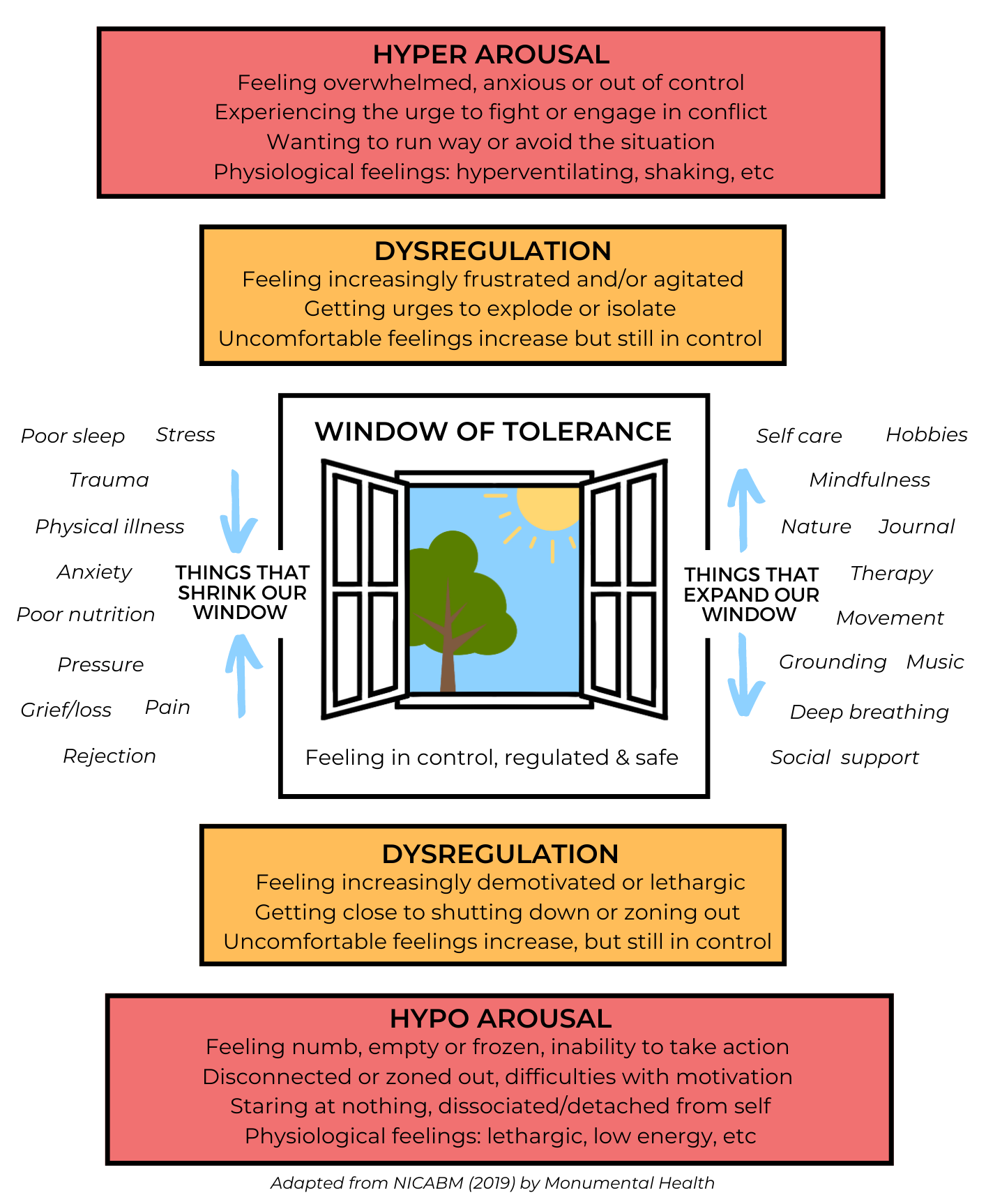
The window of tolerance is a concept originally developed by Dr. Dan Siegel, MD to describe the optimal zone of “arousal” for a person to function in everyday life.
It is a way to describe the zone where our nervous system feels balanced and we can handle life’s ups and downs. When we are inside our window, we’re able to think clearly, manage emotions, and respond rather than react. We might still feel stress, sadness, or excitement, but it feels manageable—we can cope.
When we move outside of our window, we can shift into two different states:
Hyperarousal (too “high”): This feels like anxiety, anger, panic, racing thoughts, or being “on edge.” Our body goes into fight-or-flight mode, making it hard to calm down.
Hypoarousal (too “low”): This feels like numbness, shut down, disconnection, or lack of energy. Our body may freeze or “check out” as a way to protect us.
Everyone’s window of tolerance is different in size. Some people have wide windows and can handle a lot of stress before getting overwhelmed. Others may have narrower windows, especially if they’ve experienced trauma, ongoing stress, or burnout.
The good news is that we can practice skills to expand our window of tolerance.
🌿 Activities to Expand the Window of Tolerance
1. Grounding and Centering
5-4-3-2-1 exercise: Name 5 things you see, 4 you feel, 3 you hear, 2 you smell, 1 you taste.
Feet on the floor: Notice the ground supporting you; press your feet gently into the floor.
Hold a grounding object: Something with texture or weight (stone, stress ball, warm mug).
2. Breathing and Regulation
Box breathing: Inhale 4, hold 4, exhale 4, hold 4.
Hand on heart + belly: Breathe slowly while noticing your hand rise and fall.
Extended exhale: Inhale for 4, exhale for 6–8 (slows the nervous system).
3. Movement
Shake it out: Stand and shake arms, legs, and body for 30 seconds.
Gentle stretching or yoga: Focus on releasing tension from shoulders, neck, and jaw.
Walking in nature: Pay attention to sights, sounds, and sensations while moving.
4. Connection and Support
Safe person check-in: Call or text someone you trust.
Co-regulation: Spend time with someone calm or a pet; notice your nervous system settling.
Soothing touch: Wrap yourself in a blanket, place a hand on your chest, or try a weighted blanket.
5. Creative Expression
Art or coloring: Express emotions without words.
Journaling: Write freely about thoughts or feelings, or list 3 things you’re grateful for.
Music: Listen to calming or uplifting songs, or play an instrument.
6. Mindfulness & Self-Compassion
Body scan: Notice sensations from head to toe without judgment.
Loving-kindness meditation: Repeat phrases like, “May I be safe. May I be calm. May I be well.”
Mindful eating: Slowly taste and savor food, noticing texture and flavor.
💡 Tip for Clients: Not every strategy will work for everyone or in every moment. Try out different activities when you’re calm first, so they feel more natural when you need them. Over time, these practices help strengthen your ability to stay inside your window of tolerance.